
Immersive Experiences: The Evolution of Virtual Reality
Virtual Reality (VR) has come a long way since its inception, transforming from a niche technology to a mainstream phenomenon that reshapes the way we perceive and interact with the digital world. This blog explores the evolution of virtual reality, delving into its roots, advancements, and the immersive experiences that define its present and future. The leading web development company specializes in creating innovative and tailored digital solutions to meet the unique needs of businesses in the ever-evolving online landscape.
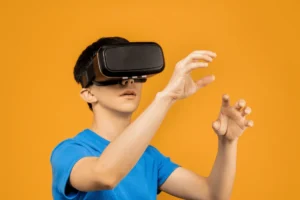
I. The Birth of Virtual Reality
In the late 20th century, the concept of virtual reality emerged as a futuristic idea. The term itself was coined by Jaron Lanier in the 1980s, marking the beginning of a journey that would revolutionize the way we experience digital content.
II. Early VR Technologies
The initial attempts at creating immersive experiences were rudimentary compared to today’s standards. Early VR technologies like Sensorama and the first head-mounted displays (HMDs) paved the way for future developments, setting the stage for the immersive experiences we enjoy today.
III. Rise of Consumer VR
The turning point for virtual reality came with the rise of consumer-grade VR devices. Companies like Oculus, HTC, and Sony entered the market, introducing headsets that offered high-quality visuals, responsive tracking, and interactive experiences. This shift brought VR from the realm of science fiction to living rooms around the world.
IV. VR in Gaming
Gaming has been a driving force behind the adoption of virtual reality. The ability to step into a virtual world and interact with it in a natural way has revolutionized the gaming industry. Titles like Beat Saber, Half-Life: Alyx, and Skyrim VR showcase the potential of immersive gaming experiences.
V. Beyond Gaming: VR in Various Industries
Virtual reality has expanded beyond gaming, making significant contributions to various industries. From healthcare and education to architecture and training simulations, VR has proven to be a versatile tool with the potential to revolutionize how we work, learn, and communicate.
VI. Advancements in VR Technology
Technological advancements continue to push the boundaries of virtual reality. Improvements in display resolution, haptic feedback, and gesture recognition enhance the level of immersion. The integration of artificial intelligence and machine learning further enriches the user experience.
VII. Challenges and Future Prospects
Despite its successes, virtual reality faces challenges such as motion sickness, content limitations, and the need for more affordable and accessible hardware. However, ongoing research and development promise a future where VR becomes an integral part of our daily lives, bridging the gap between the physical and digital worlds.
VIII. Social VR: Connecting People in Virtual Spaces
One of the recent trends in virtual reality is the emergence of social VR platforms. These platforms go beyond the solitary experience of wearing a headset by allowing users to interact with each other in shared virtual spaces. Whether it’s attending virtual concerts, collaborating on projects, or simply hanging out with friends in a virtual environment, social VR is redefining how we connect with others in the digital age.
IX. VR and Healthcare: Revolutionizing Patient Care
Virtual reality is making significant strides in the healthcare sector. From virtual surgeries and medical training simulations to therapeutic applications for pain management and mental health, VR is proving to be a valuable tool in revolutionizing patient care. The immersive nature of VR aids in creating realistic scenarios for medical professionals and provides therapeutic interventions for patients.
X. The Impact of Augmented Reality (AR) on VR
While virtual reality immerses users in entirely digital environments, augmented reality overlays digital content onto the real world. The convergence of VR and AR technologies opens up new possibilities, creating mixed reality experiences. This blending of the physical and virtual worlds enhances immersion and expands the potential applications of both technologies.
XI. Accessibility and Inclusivity in VR
As virtual reality becomes more widespread, there is a growing emphasis on ensuring accessibility and inclusivity. Efforts are underway to address issues such as motion sickness, accommodate diverse physical abilities, and provide content that caters to a wide range of audiences. Making VR experiences more accessible ensures that this transformative technology is available to everyone, regardless of their physical or cognitive abilities.
Conclusion
The evolution of virtual reality has been a captivating journey from its conceptualization to its current state. The immersive experiences it offers have transformed entertainment, education, and various industries. As technology continues to advance, virtual reality is poised to become an even more integral part of our lives, shaping the way we connect with the digital realm. The journey of virtual reality is far from over, and the future holds exciting possibilities for this groundbreaking technology.